Tag: geo

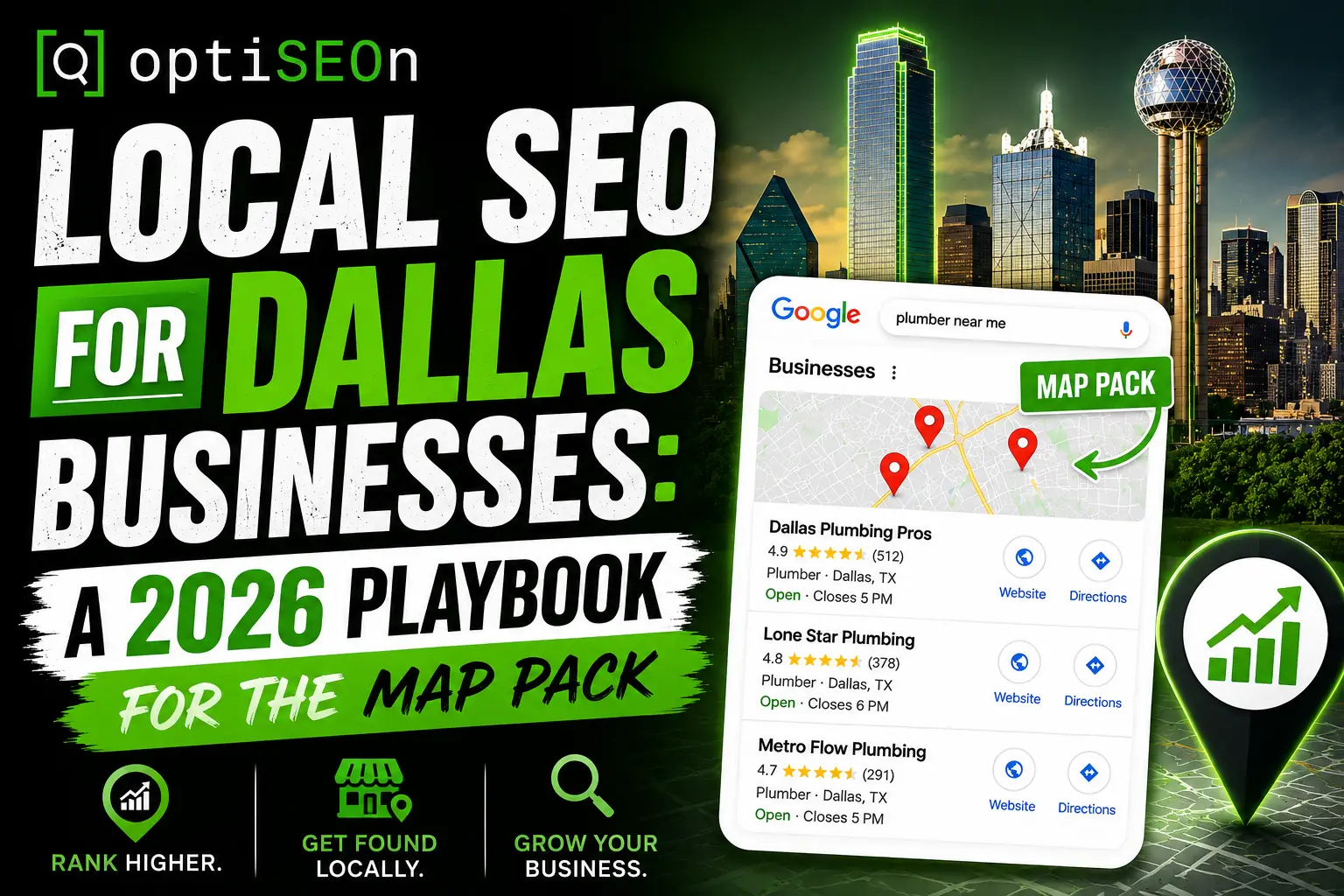
  • Local SEO for Dallas Businesses: A 2026 Playbook for the Map Pack

    Local SEO for Dallas Businesses: A 2026 Playbook for the Map Pack

    If you run a business in Dallas, whether you have a storefront in Bishop Arts, serve the DFW area, or operate three locations from Plano to Cedar Hill, local SEO is likely the best marketing investment you can make in 2026.

    Here’s why: local searches usually lead to action, not endless comparison. When someone searches for “plumber near me,” “best Italian restaurant Dallas,” or “marketing agency in Richardson,” they are ready to act, often within an hour. For these high-intent searches, the Google Map Pack—the three listings at the top of the results with the map—gets about 40% to 50% of the clicks. The first regular blue link below it gets much less.

    Get into the Map Pack and you eat. Stay out and you starve.

    This guide explains how Dallas businesses can earn and keep Map Pack visibility in 2026. It also covers how local SEO has changed with the growth of voice search, AI Overviews, and “near me” voice queries.

    What is local SEO and how is it different from regular SEO?

    Local SEO, sometimes called Geographic SEO or GEO, is the practice of ranking in location-based search results. (Note: GEO can also mean Generative Engine Optimization, which is different.) Local SEO includes Map Pack listings, “near me” searches, voice queries, and Google Maps searches.

    Where regular SEO targets keyword-based search results, local SEO targets:

    • The Google Map Pack (also called the “3-pack” or “Local Pack”)
    • Google Maps results
    • Voice search (“Hey Siri, find a barber near me”)
    • “Near me” mobile searches
    • Apple Maps and Apple Business Connect
    • Bing Places

    Google uses a slightly different ranking algorithm for local results. It focuses on three main factors: relevance (does the business match the search?), distance (how close is the business to the searcher?), and prominence (how well-known and well-reviewed is the business?). The steps below address all three.

    The Dallas local search landscape in 2026

    A few things specific to Dallas that affect strategy:

    • The DFW area covers a large region. A search for “Dallas SEO agency” can show results from Plano, Frisco, Richardson, Irving, and Arlington. If you serve certain neighborhoods, make sure your local pages mention them by name.
    • Voice search is common in this area. Texas has higher than average use of voice assistants, partly because of long commutes. Requests like “Find me a [thing] near me” make up a significant part of local searches in DFW.
    • Competition depends a lot on your business type. For example, “Dallas dentist” is very competitive, while “Dallas commercial roofing inspector” has much less competition. Focus on keywords that match your actual services, not just the broadest terms.
    • The metro area is big enough to support service-area pages. Single-location businesses often benefit from making dedicated landing pages for each major neighborhood or suburb they serve, as long as these pages have real content and are not just thin doorway pages.

    Step 1: Optimize your Google Business Profile (the single biggest lever)

    Your Google Business Profile (GBP) is the most important part of local SEO. It is free, you control it, and it has the biggest impact on Map Pack rankings. If you only do one thing from this article, make sure your GBP is set up correctly.

    The 2026 GBP checklist:

    • Claim and verify your profile. Most businesses have already done this, but if you have not, this is your first step.
    • Primary category: Choose the most specific category that matches your main business. For example, “SEO Agency” is better than “Marketing Agency” if SEO is your main service. Being specific helps.
    • Secondary categories: Add up to nine more categories, making sure they are all relevant.
    • Business name: Use your exact legal name and avoid adding extra keywords. Google penalizes names like “Joe’s Plumbing | 24/7 Emergency Dallas,” so keep it simple.
    • NAP consistency: Make sure your name, address, and phone number are exactly the same as on your website and other directories.
    • Service area definition: For service-area businesses, set your radius or list the specific cities and zip codes you serve.
    • Hours: Include your regular and holiday hours, and keep them accurate.
    • Photos: Upload at least 10 high-quality photos and update them every month. Photos help your ranking.
    • Products/Services: List every service you offer and include descriptions.
    • Posts: Add Google Posts (sometimes called updates) every one to two weeks.
    • Q&A: Answer common customer questions ahead of time and respond to new questions as they come in.
    • Reviews — covered in detail below

    A complete GBP is not a one-time task. You need to keep it updated regularly. The businesses that rank in the Dallas Map Pack are usually the ones updating their profile every week.

    Step 2: Build local citations (consistently)

    A local citation is any mention of your business name, address, and phone number on another website. Google uses citations to check that your business is real and consistent. This is why NAP consistency is so important.

    The citation hierarchy in 2026:

    • Tier 1 (must-have): Google Business Profile, Apple Business Connect, Bing Places, Facebook, Yelp, Better Business Bureau
    • Tier 2 (industry-relevant): Category-specific directories (Avvo for lawyers, Zocdoc for medical, Houzz for home services, Clutch for agencies)
    • Tier 3 (local Dallas/Texas): Dallas Chamber of Commerce, Dallas Business Journal directory listings, neighborhood and community sites

    Aim for 50 to 100 high-quality citations instead of 1,000 low-quality ones. Consistency is more important than quantity. One mismatched address across 200 directories is worse than having 50 perfect citations.

    OptiSEOn’s GEO service includes managed citation building across 260+ platforms, which removes most of the manual work here.

    Step 3: Get reviews — the right way, and consistently

    Reviews are probably the second most important Map Pack ranking factor after having a complete GBP. But it is not just the number of reviews that matters. Google also looks at:

    • Recency — fresh reviews count more than old ones (review velocity matters)
    • Diversity — reviews from different account types and geographies
    • Response rate — businesses that respond to reviews (both positive and negative) rank better
    • Review keywords — reviews mentioning your services and location signal relevance

    A simple system that works: after every completed job or transaction, ask the customer for a review with a direct link. Don’t gate reviews (“only ask happy customers” violates Google’s policy and Yelp filters review-bait aggressively). Make it easy. Follow up once.

    You should have a response template for every review, both positive and negative. Even a simple reply like “Thanks, [name]! We appreciate it!” on positive reviews shows your business is active.

    Step 4: Build local landing pages (without going thin)

    If you serve several neighborhoods or cities in the DFW area, dedicated landing pages can help you rank for those specific local searches. The important thing is that these pages are dedicated, not copied.

    The wrong way: copy your “Plumbing Services” page 12 times, swap in different city names, and call them “Plumbing Services in Plano,” “Plumbing Services in Frisco,” and so on. Google has been demoting and penalizing these for years. They’re called “doorway pages” and they hurt more than they help.

    The right way: each local page has unique content addressing what’s different about that area. Local case studies, local landmarks, area-specific service nuances, neighborhood-specific testimonials, and a real local phone number or address if applicable.

    A Dallas plumbing business might have:

    • A Plano page focused on the high water-mineral content typical to that area’s wells
    • A Highland Park page focused on older home plumbing and historic district considerations
    • A Richardson page focused on the commercial property mix in that area

    Each page should be different and useful. Do not just use the same template with a different city name.

    Step 5: Optimize for voice and “near me” search

    Voice search now makes up a large part of local searches, and the way people search is different. People do not type “find a coffee shop near me”—they type “best coffee Dallas.” But when using Siri or Google Assistant, they say “find a coffee shop near me.”

    Voice and “near me” optimization tactics:

    • Conversational long-tail keywords in your content (“Where’s the best place to get a tire rotation in Dallas?” matches actual voice queries)
    • FAQ pages structured around full questions, with short direct answers (this is also Answer Engine Optimization territory)
    • Mobile site speed: Voice searchers are almost always on mobile devices, and slow sites are filtered out before voice assistants show them.
    • LocalBusiness schema markup with full geographic coordinates, service areas, and hours

    Voice search overlaps heavily with the AEO work covered in our breakdown of AEO vs SEO vs GEO. The structures that win featured snippets also win voice queries.

    Step 6: Mind your technical and on-site SEO

    Local SEO does not mean you can ignore the basics. The ranking factors in our 2026 SEO ranking guide still matter: site speed, mobile responsiveness, Core Web Vitals, internal linking, and on-page optimization.

    A few local-specific technical items:

    • Embed a Google Map on your contact page (not a screenshot — the actual embed)
    • Schema markup — LocalBusiness schema on your contact page, sitewide Organization schema
    • Mobile-first design — most local searches happen on mobile
    • HTTPS: This is required in 2026.

    How long does Dallas local SEO take to work?

    To be honest, local SEO works faster than national SEO but slower than paid ads.

    • Weeks 1–4: GBP optimization and basic citation cleanup. You’ll see indexing changes and sometimes rapid Map Pack movement.
    • Weeks 4–12: Citation building compounds, reviews accumulate, and rankings stabilize for the most-competitive local terms.
    • Months 3–6: Sustained Map Pack visibility for your primary categories, especially after a steady review velocity is established.

    This is also why it helps to have an agency that combines GBP work with your overall SEO strategy. OptiSEOn’s monthly service includes Geographic SEO, core SEO, AEO, and LLM Optimization. In 2026, all of these work together. A Dallas business that ranks in the Map Pack and appears when someone asks ChatGPT “best [your category] in Dallas” gets even more visibility.

    Frequently Asked Questions

    What is the Google Map Pack and why does it matter? The Google Map Pack is a group of three local business listings that appears at the top of search results for location-based searches, along with a map. It gets a large share of clicks for local searches, usually more than the top regular result below it.

    How long does local SEO take to work in Dallas? Most Dallas businesses see improvements in Map Pack rankings within 30 to 60 days if they optimize their GBP and build citations at the same time. Staying in the top three for competitive categories usually takes three to six months of steady effort.

    Do I need a physical address in Dallas to rank locally? For Map Pack rankings, yes, you need a verified business address. Service-area businesses without a storefront can rank for specific areas by setting up their GBP correctly, but a fully virtual business with no Texas address cannot rank in the Dallas Map Pack.

    How many reviews do I need to rank in the Dallas Map Pack? There is no set number—it depends on your business category. For competitive categories like dentists, lawyers, or restaurants, top Map Pack businesses usually have over 100 reviews with recent activity. For less competitive categories, 20 to 50 good reviews may be enough. Recent reviews and your response rate matter more than the total number.

    Can I do local SEO myself or should I hire a Dallas SEO agency? You can handle GBP optimization and basic citation cleanup yourself. For ongoing review management, content creation, building citations across many platforms, and integrating with broader SEO, most businesses save time by hiring an agency. Mistakes like inconsistent NAP or policy violations can take months to fix.

    What’s the difference between local SEO and GEO? “Local SEO” and “Geographic SEO” mean the same thing; both are about optimizing for location-based search. However, in 2026, “GEO” often also means Generative Engine Optimization, which is about being mentioned in AI-generated answers. Always check which meaning is intended.


    Want a free local SEO audit for your Dallas business? OptiSEOn is based right here in Dallas at 12250 Abrams Rd, and we know the metro area well. Book your free audit and we will show you exactly where you stand in the Map Pack today and what it would take to reach a top-three spot.
  • AEO vs SEO vs GEO vs LLM Optimization: What’s the Difference (and Which Do You Need)?

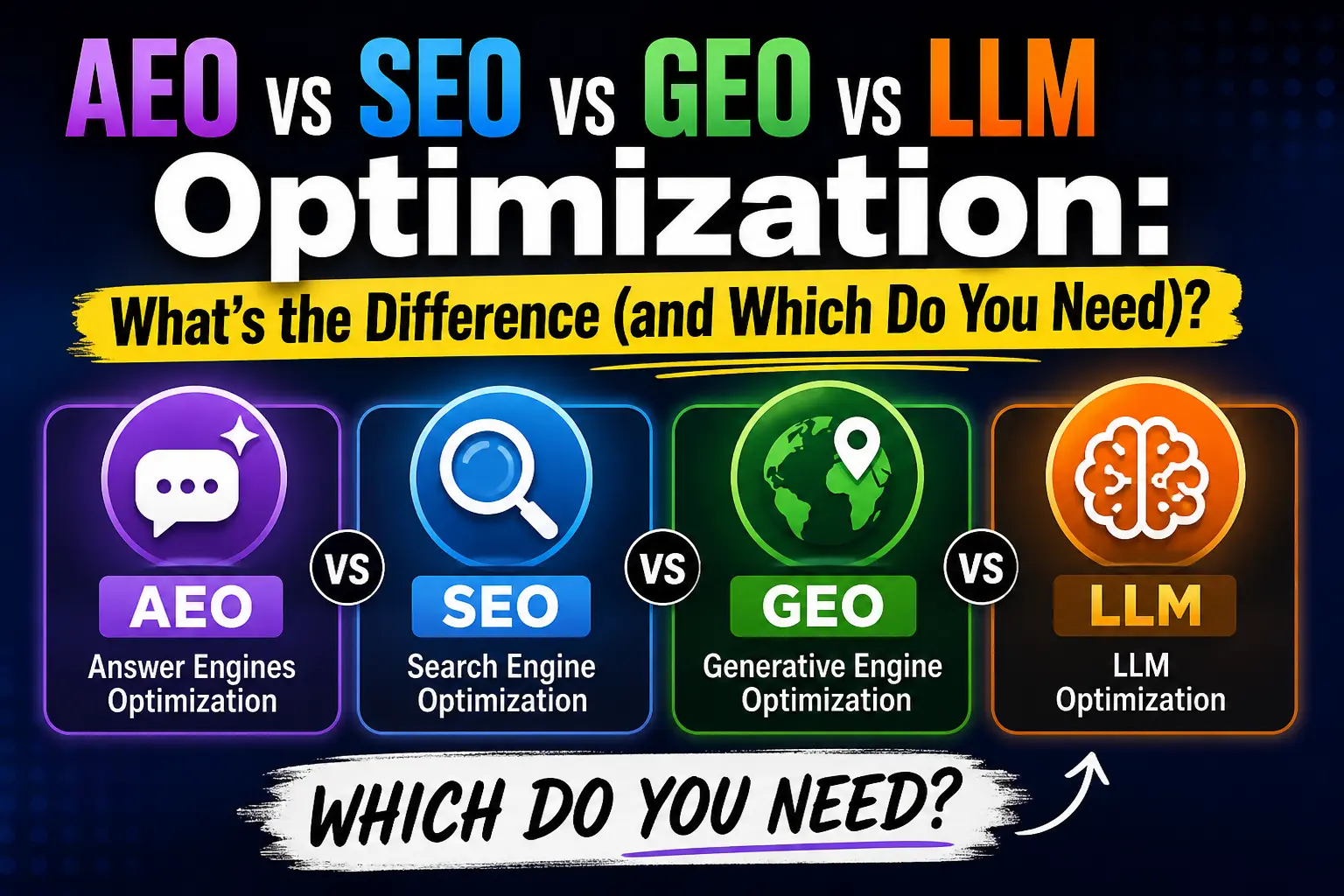
    AEO vs SEO vs GEO vs LLM Optimization: What’s the Difference (and Which Do You Need)?

    If you’ve spent any time researching how to make your business more findable online lately, you’ve run into an alphabet soup of three-letter acronyms: SEO, AEO, GEO, LLM. They all promise more visibility. They all sound like the same thing. And most articles you’ll find treat them as if they are.

    They’re not.

    Each one targets a different kind of search, on a different kind of platform, with a different kind of optimization work behind it. Get the difference right and you’ll know exactly where to spend. Get it wrong and you’ll pay an SEO agency in 2026 with a 2018 playbook — and stay invisible everywhere except Google.

    Here’s the plain-English breakdown.

    TL;DR — the four-line answer

    • SEO gets you ranked on Google and Bing for keyword searches.
    • AEO gets you featured in answer boxes, voice results, and “People Also Ask.”
    • GEO has two meanings in 2026: Geographic SEO (local map pack) and Generative Engine Optimization (showing up in ChatGPT/Perplexity answers). Yes, really. Same acronym, two meanings.
    • LLM Optimization is the umbrella term for getting recommended by AI tools like ChatGPT, Gemini, Claude, and Perplexity.

    You probably need a combination — and the right combination depends on whether your customers are clicking blue links, asking voice assistants, walking in off Google Maps, or asking ChatGPT for a recommendation. Most businesses now need all four.

    CTA box: Want a free audit of how you’re showing up across all four? Book a free SEO + AI visibility audit.

    What is SEO (Search Engine Optimization)?

    SEO is the original. It’s the work of getting a website to rank highly on traditional search engines — Google primarily, then Bing, DuckDuckGo, and Yandex. When someone types “best plumber in Dallas” or “marketing automation software for small businesses” into a search bar and hits enter, SEO is what determines whether your business shows up on page one.

    The core ingredients of modern SEO:

    • On-page SEO — keyword-optimized titles, headings, body copy, image alt text, and meta descriptions
    • Technical SEO — site speed, mobile responsiveness, crawlability, structured data, internal linking
    • Off-page SEO — backlinks from authoritative sites, brand mentions, digital PR
    • Content SEO — publishing useful, original content that earns rankings naturally

    If you want a deeper look at what’s actually moving rankings this year, our breakdown of the 2026 SEO ranking factors that actually matter goes into the specifics. SEO still works in 2026, and Google still drives the majority of search traffic for most businesses — but it’s no longer the only discovery channel that matters.

    You can read more about how OptiSEOn handles SEO specifically on our services page.

    What is AEO (Answer Engine Optimization)?

    AEO is what happens when search stops returning ten blue links and starts returning a single answer.

    Open Google today and search “what’s the best time to post on Instagram.” Notice what shows up at the top — it’s not a list of links. It’s a featured snippet pulling a direct answer from somebody’s blog post. That’s an answer engine result. AEO is the practice of structuring your content so that your answer is the one that gets pulled.

    Where SEO targets the search results page, AEO targets:

    • Featured snippets (the “position zero” answer box at the top of Google)
    • People Also Ask (the expanding question boxes)
    • Voice search results (when someone asks Siri, Alexa, or Google Assistant)
    • Google AI Overviews (the AI-generated summaries now appearing on a growing share of queries)

    The work behind AEO is mostly content structure: writing in question-and-answer format, using FAQ and HowTo schema markup, keeping answers between 40–60 words (the sweet spot for snippet extraction), and making sure your most important facts are in the first paragraph of every section, not the last.

    If you want AEO done for you, OptiSEOn’s AEO service includes featured snippet targeting, FAQ schema, and voice search optimization.

    What is GEO? (Both meanings explained)

    This one’s frustrating because the SEO industry collectively agreed to use the same acronym for two completely different things. Here’s how to tell them apart in 2026.

    Meaning 1: Geographic SEO (local SEO)

    Geographic SEO — sometimes called Local SEO — is what you do to rank in location-based searches. The Google Map Pack (those three local listings with the map at the top of search results), “near me” searches, voice queries like “find a coffee shop near me,” and Google Business Profile rankings.

    Geographic SEO is critical for any business with a physical location or a defined service area: dentists, plumbers, restaurants, law firms, multi-location retailers. The core work involves:

    • Google Business Profile optimization — complete profile, accurate categories, regular posts, photos
    • Local citations — consistent name/address/phone (NAP) across directories
    • Local landing pages — one optimized page per service area or city
    • Reviews — both quantity and velocity matter for ranking

    Meaning 2: Generative Engine Optimization

    Generative Engine Optimization is the newer, AI-native meaning. It’s the practice of optimizing your content and brand signals so that you appear in answers generated by AI tools — ChatGPT, Google Gemini, Claude, Perplexity, Microsoft Copilot.

    A traditional Google search returns links. A generative engine returns a generated answer with citations. GEO (in this sense) is what gets your business cited inside that answer.

    Some of the techniques overlap with AEO and LLM Optimization, but Generative Engine Optimization specifically focuses on:

    • Building strong entity signals — Wikipedia, Wikidata, structured data, brand mentions across the web
    • Creating citation-worthy content — original data, statistics, expert quotes
    • Earning third-party authority — getting mentioned on Reddit, in industry publications, on review sites that AI engines weight heavily

    The confusing part: at OptiSEOn we offer both meanings of GEO, because both matter. Our Geographic SEO service covers map pack rankings, and our LLM Optimization service covers generative engine work.

    What is LLM Optimization?

    LLM Optimization is the umbrella term for everything that gets your business recognized, trusted, and recommended by Large Language Model–powered AI tools.

    When someone asks ChatGPT “what’s the best B2B SEO agency in Dallas,” LLM Optimization is what determines whether you’re in the answer or not.

    We’ve covered the strategic shift in detail in How LLMs Are Replacing Traditional Search, and What You Can Do About It, and we’ll dig into the tactical side in our next post on how to get cited by ChatGPT, Perplexity, and Gemini (publishing May 13).

    The short version: LLM Optimization combines AEO content structure, GEO entity signals, and a few new techniques like llms.txt files, schema markup tuned for AI extraction, and consistent brand presence on the platforms AI tools cite most heavily.

    Side-by-side: SEO vs AEO vs GEO vs LLM

    DisciplineWhere it gets you visiblePrimary tacticBest for
    SEOGoogle, Bing search resultsKeywords, backlinks, technical SEOEvery business with a website
    AEOFeatured snippets, voice, People Also AskQ&A content, FAQ schema, structured answersService businesses, publishers, B2B
    Geographic SEOGoogle Maps, Map Pack, “near me”Google Business Profile, local citations, reviewsLocal businesses, multi-location brands
    Generative Engine OptimizationChatGPT, Gemini, Perplexity answersEntity signals, citation-worthy contentBusinesses competing for AI recommendations
    LLM OptimizationAll AI tools (umbrella term)Combined AEO + GEO + AI-specific techniquesAny business that wants to be AI-discoverable

    Which one does your business actually need?

    Here’s the honest answer: in 2026, most businesses need a combination, and trying to pick one is the wrong frame.

    But if you’re starting from scratch and have a limited budget, here’s the order I’d prioritize:

    1. Start with SEO and AEO together. They reinforce each other. You can’t earn featured snippets without solid SEO fundamentals, and you can’t earn AI citations without first being indexable and structured well.
    2. Add Geographic SEO next if you’re a local or service-area business. The map pack converts at higher rates than organic blue links for local intent.
    3. Layer LLM Optimization on top once you have the foundation. AI engines pull from already-authoritative sources, so the work you do for SEO and AEO directly feeds your AI visibility.

    Trying to skip the foundation and jump straight to “ranking on ChatGPT” rarely works. The AI engines are pulling from the same web your SEO is optimizing — they just present it differently.

    How OptiSEOn handles all four in one system

    Most agencies sell you one of these and call the rest an “upgrade.” That’s how you end up with a pretty website that ranks on Google but is invisible to ChatGPT, or a strong AI presence with no map pack visibility.

    OptiSEOn integrates all four pillars into one monthly engagement. SEO builds the foundation, AEO captures the answer-box opportunities, Geographic SEO owns your local market, and LLM Optimization gets you recommended where buyers are increasingly looking. See how the four pillars work together, or check out our pricing — month-to-month, no long-term contracts.

    Frequently Asked Questions

    What is the difference between SEO and AEO? SEO targets traditional ranked search results (the list of blue links on Google). AEO targets answer-based formats — featured snippets, voice search results, People Also Ask, and Google AI Overviews. AEO is best understood as a specialized layer on top of SEO, not a replacement.

    Is GEO the same as Generative Engine Optimization? “GEO” is currently used to mean two different things in 2026: Geographic SEO (local search and map pack optimization) and Generative Engine Optimization (showing up in AI-generated answers). Always clarify which meaning your agency or article is using.

    Do I need all four — SEO, AEO, GEO, and LLM? Most businesses benefit from all four because each one captures a different type of search. A local service business needs Geographic SEO heavily; a B2B SaaS company benefits more from LLM Optimization; almost everyone needs SEO and AEO as foundations.

    Which has the best ROI in 2026? Geographic SEO typically delivers the fastest ROI for local businesses because map pack visibility converts directly to phone calls and visits. LLM Optimization has the longest tail — once your brand is established as an AI-cited source, it compounds. SEO and AEO sit in the middle.

    Can I do this myself or do I need an agency? The technical foundation (schema, site speed, indexability) and the content-structuring work for AEO can be done in-house if you have the time. LLM Optimization and Geographic SEO are more nuanced and benefit from specialized expertise. The fastest path is usually a free audit to identify which areas you’re weakest in.


    Ready to figure out which of these your business actually needs? Book a free SEO + AI visibility audit — no pitch, no pressure. We’ll show you exactly where you’re winning and where you’re invisible.

  • The Future of Search Is Here: How to Win Visibility Across Google, AI, and Beyond (2026 Guide)

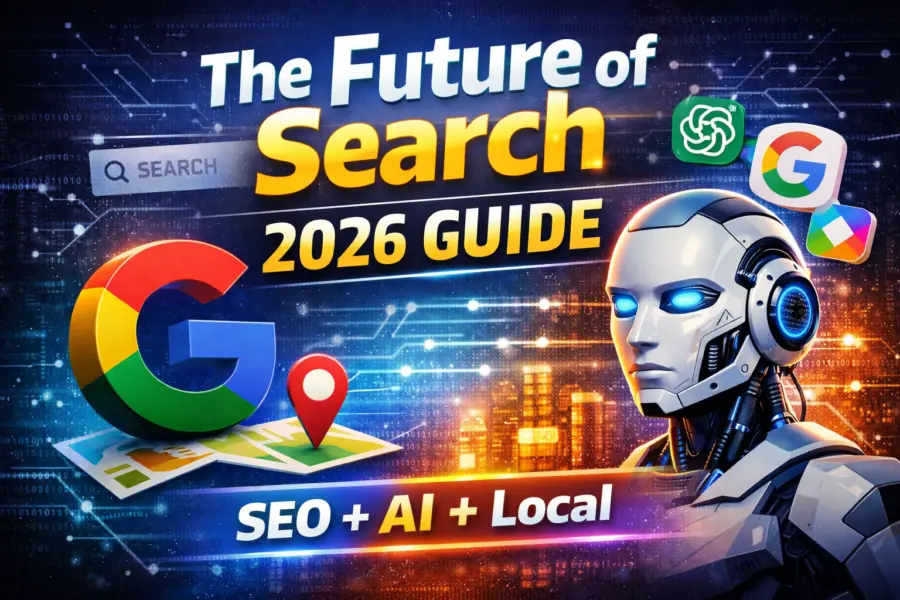
    The Future of Search Is Here: How to Win Visibility Across Google, AI, and Beyond (2026 Guide)

    Search Has Changed — Most Businesses Haven’t

    If you’re still thinking SEO is just about ranking #1 on Google, you’re already behind.

    Search in 2026 is no longer just about blue links.

    Today, your customers find answers through:

    • Google Search (still important)
    • Featured snippets & People Also Ask
    • Voice assistants
    • AI platforms like ChatGPT, Gemini, and Perplexity

    👉 This means one thing:
    Ranking is no longer the goal. Visibility is.


    The New Visibility Framework (What Actually Works Now)

    Most agencies stop at SEO.

    You don’t.

    At OptiSEOn, we combine:

    • SEO (Search Engine Optimization) → Rank on Google
    • AEO (Answer Engine Optimization) → Get featured in answers
    • GEO (Geographic Optimization) → Dominate local search
    • LLM Optimization → Get mentioned by AI platforms

    👉 This is how modern brands win.


    1. Search Intent Is Everything (More Than Ever)

    Google and AI platforms are obsessed with one thing:

    Does your content directly answer the user’s question?

    What’s changed:

    • Queries are longer and conversational
    • AI summarizes answers before clicks happen
    • Users expect instant clarity

    What to do:

    • Answer the question in the first 2–3 sentences
    • Use clear headings and structure
    • Match content format to intent:
      • Informational → Guides, lists
      • Commercial → Comparisons
      • Transactional → Landing pages

    👉 If you miss intent, nothing else matters.


    2. EEAT Is Now Non-Negotiable

    Google’s EEAT (Experience, Expertise, Authority, Trust) is stronger than ever—and AI models follow the same signals.

    To build EEAT:

    • Show real experience (case studies, results)
    • Use author profiles
    • Get brand mentions + backlinks
    • Keep content accurate and updated

    👉 Trust is the new ranking factor.


    3. AI Is Replacing Clicks (And You Need to Adapt)

    AI tools don’t just rank pages—they choose answers.

    If your brand isn’t included in those answers, you’re invisible.

    How to optimize for AI visibility:

    • Write clear, direct answers
    • Use FAQ sections
    • Structure content for easy extraction
    • Build topical authority across your niche

    👉 You’re no longer competing for clicks.
    You’re competing to be the answer.


    4. Local SEO (GEO) Is a Hidden Goldmine

    If you serve a specific area, local search is one of the fastest ways to win.

    Key actions:

    • Optimize your Google Business Profile
    • Build consistent citations
    • Get real customer reviews
    • Create location-specific pages

    👉 Local = lower competition + higher conversions.


    5. Backlinks Still Matter (But Differently)

    Links are still important—but spammy tactics don’t work anymore.

    What works now:

    • Brand mentions (even unlinked)
    • Authority links from real sites
    • Digital PR
    • Industry directories

    👉 It’s about credibility, not just quantity.


    6. Technical SEO = Your Foundation

    If your site isn’t crawlable, nothing else matters.

    Must-haves:

    • Fast load speed
    • Mobile optimization
    • Clean site structure
    • Schema markup
    • Proper indexing

    👉 Think of this as your infrastructure.


    7. Content Depth Beats Content Volume

    Publishing 100 weak articles won’t help.

    One strong, authoritative piece will.

    Winning content strategy:

    • Go deep, not wide
    • Cover topics fully
    • Build topic clusters
    • Update content regularly

    👉 Authority beats frequency.


    The Real Shift: From Ranking to Total Visibility

    Here’s the truth most people won’t tell you:

    👉 SEO alone is no longer enough.

    To win in 2026, your brand must show up:

    • On search engines
    • Inside AI-generated answers
    • In local results
    • Across the web as a trusted entity

    How OptiSEOn Helps You Win

    At OptiSEOn, we don’t just “do SEO.”

    We build complete visibility systems that:

    • Rank your site on Google
    • Get your brand mentioned in AI platforms
    • Dominate local search results
    • Turn visibility into real revenue

    Ready to Future-Proof Your Business?

    If your competitors start showing up in AI answers before you do, you’ll lose traffic before you even realize it.

    👉 The shift is already happening.


    Take Action Now

    Visit: https://optiseon.com
    Or contact us to see how we can grow your visibility across SEO, AI, and beyond.