Category: SEO

  • How to Get Your Business Cited by ChatGPT, Perplexity & Gemini in 2026

    How to Get Your Business Cited by ChatGPT, Perplexity & Gemini in 2026

    How to Get Your Business Cited by ChatGPT Perplexity & Gemini in 2026

    Two years ago, most people searched Google when they needed a service provider. Today, a growing number are asking AI tools like ChatGPT, Perplexity, or Gemini instead. Instead of scrolling through pages of search results, they get a direct answer with a few recommended brands.

    If your business is not one of those recommendations, you are likely missing the lead.

    This shift has created a new discipline often called AI citation optimization or LLM Optimization. The goal is simple: help AI platforms recognize, trust, and recommend your business. Here’s what is actually working in 2026, based on real-world results.

    What Does It Mean to Be “Cited” by AI?

    There are two ways AI tools typically reference brands:

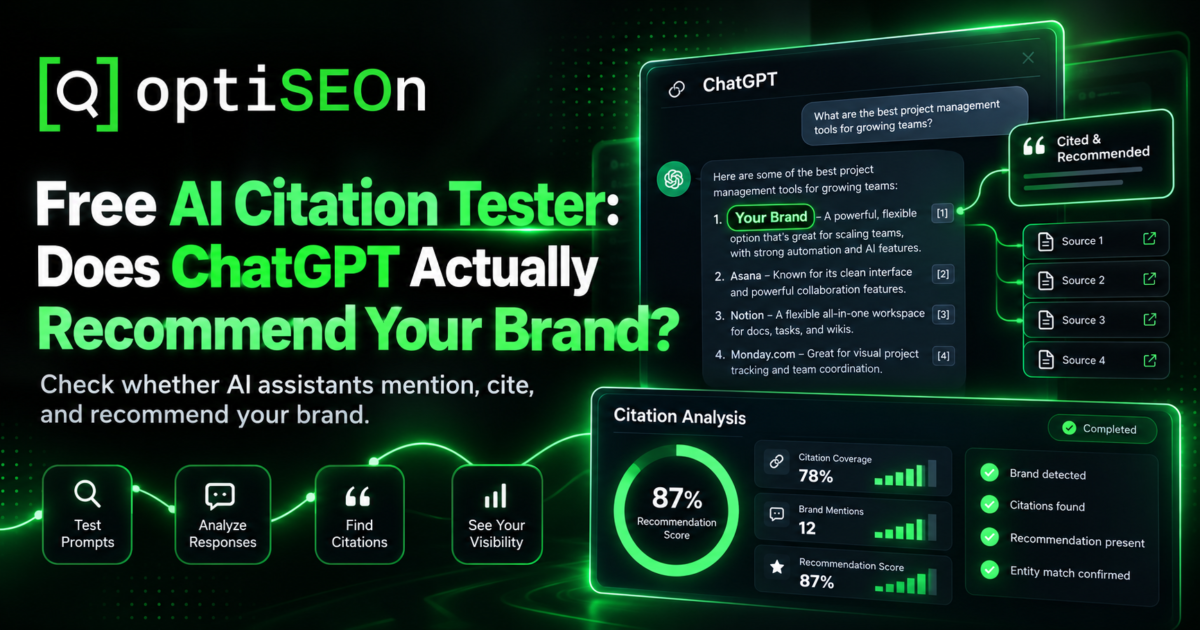
    • Mention: Your brand name appears in the response.
    • Citation: The AI links directly to your website as a source.

    Citations matter more. A mention shows the AI knows your business exists. A citation shows the AI considers your content trustworthy enough to use as a source.

    Each platform handles this differently:

    • Perplexity almost always displays source links and sends measurable referral traffic.
    • ChatGPT sometimes includes citations, especially when web search is enabled.
    • Gemini and Google AI Overviews blend citations into Google’s search experience.
    • Claude increasingly shows citations when using web-enabled search.

    The real objective is not just getting mentioned once. It’s becoming a trusted entity that AI systems consistently reference across different types of searches.

    The Three Signals AI Engines Care About Most

    Most “AI SEO” advice online can be simplified into three core signals.

    1. Clear, Structured Content

    AI systems prefer content that is easy to extract and summarize.

    Pages that perform well usually include:

    • Question-based headings
    • Direct answers near the top of each section
    • Bullet points and numbered lists
    • Comparison tables
    • Short summaries or TL;DR sections

    A concise, useful answer beats long, unfocused writing almost every time.

    2. Strong Entity Authority

    AI tools want confidence that your business is legitimate and trustworthy.

    That authority comes from:

    • Consistent business information across the web
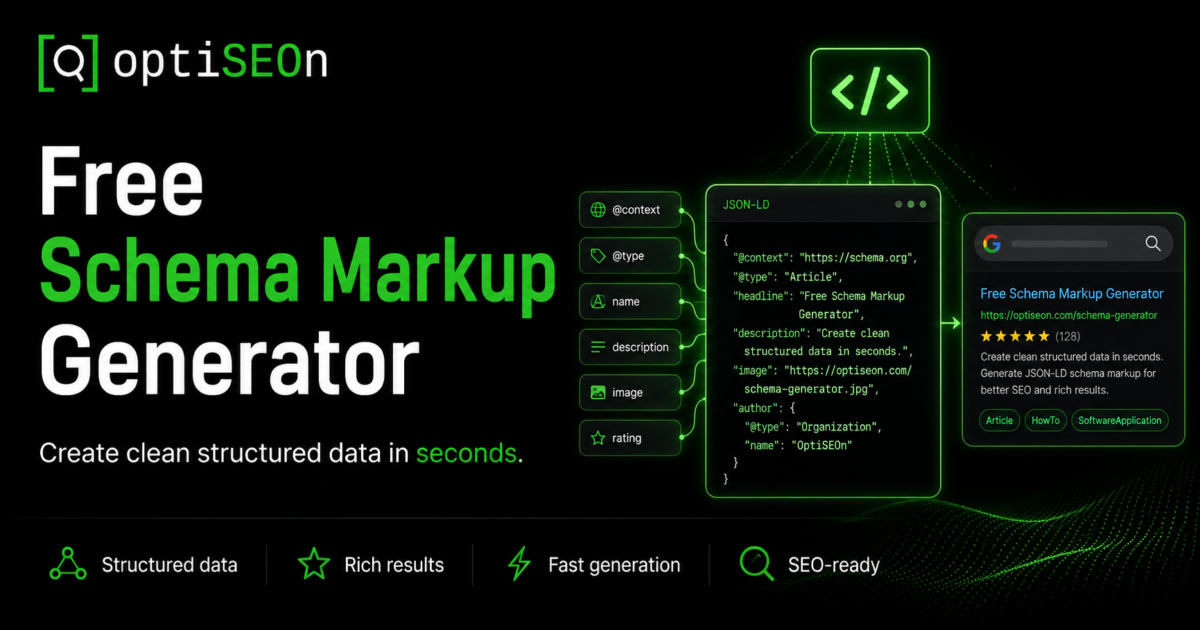
    • Schema markup
    • Mentions on reputable websites
    • Reviews and citations
    • Author profiles and E-E-A-T signals
    • Presence on trusted platforms

    The stronger your entity signals, the more likely AI tools are to recommend you.

    3. Diverse Source Presence

    Different AI platforms rely on different data sources.

    For example:

    • ChatGPT frequently references Wikipedia and authoritative editorial content.
    • Perplexity often pulls from Reddit and community discussions.
    • Google AI Overviews uses a broader mix of search-indexed sources.

    If your business only exists on your own website, your visibility ceiling is limited.

    Step 1: Structure Content for AI Extraction

    This is one of the easiest and highest-impact improvements you can make.

    The format that performs best usually looks like this:

    • An H2 that matches a real question
    • A direct answer within the first 40–60 words
    • Supporting details afterward
    • Lists or tables where useful

    Examples:

    • “What Is LLM Optimization?”
    • “How Do AI Citations Work?”
    • “Why Is Schema Markup Important?”

    This approach overlaps heavily with Answer Engine Optimization (AEO). The same content structure that wins featured snippets in Google often performs well in AI-generated answers too.

    Step 2: Implement Schema Markup Properly

    Schema markup helps AI systems understand exactly what your content represents.

    At minimum, most businesses should implement:

    • Article schema
    • FAQPage schema
    • HowTo schema
    • LocalBusiness schema
    • Organization schema
    • Author schema
    • Product or Service schema

    Without structured data, AI systems have to guess. With it, they can classify your content far more accurately.

    In 2026, schema is not optional anymore. It is foundational infrastructure.

    Step 3: Build Authority Beyond Your Website

    Your website alone is usually not enough.

    AI engines evaluate your reputation across the broader web.

    High-value authority signals include:

    • Industry publications
    • Podcasts and interviews
    • Reddit discussions
    • G2, Trustpilot, and review platforms
    • LinkedIn and YouTube content
    • Brand mentions on trusted websites

    Wikipedia and Wikidata are powerful signals too, although most smaller businesses will not qualify for a Wikipedia page due to strict notability standards.

    This kind of authority building takes time, but it compounds.

    Step 4: Monitor AI Visibility

    Most companies have no idea whether AI tools are recommending them.

    A simple tracking process includes:

    1. Build a list of 20–40 customer questions.
    2. Test those prompts weekly in ChatGPT, Perplexity, Gemini, and Claude.
    3. Record whether your business is:
      • Mentioned
      • Cited
      • Missing entirely
    4. Track which competitors appear most often.

    Dedicated platforms like Profound, Otterly, and Semrush AI Visibility Toolkit can automate much of this process.

    Step 5: Keep Content Updated

    Freshness matters more than many businesses realize.

    Older content often loses visibility over time, even if the information is still accurate.

    A strong refresh process includes:

    • Updating statistics
    • Revising examples
    • Adding new FAQs
    • Refreshing case studies
    • Updating timestamps visibly on-page

    Start with your highest-intent pages first.

    What Not to Do

    There is a lot of bad advice circulating around AI optimization right now.

    Avoid these mistakes:

    • Keyword stuffing for AI engines
    • Paying for “guaranteed AI citations”
    • Ignoring traditional SEO
    • Optimizing for only one AI platform

    AI visibility still depends heavily on strong technical SEO and crawlable content.

    The Reality About Timelines

    This is not an overnight process.

    Most businesses start seeing early improvements within 60–90 days after improving structure, schema, and technical foundations.

    Consistent visibility across multiple AI platforms usually takes 6+ months because it depends on long-term authority building.

    The companies dominating AI visibility today started investing in it years ago.

    Frequently Asked Questions

    How long does it take to get cited by ChatGPT?

    Many businesses begin seeing early mentions within 2–3 months after restructuring content and implementing schema. Consistent citations across multiple AI platforms generally take longer because authority signals build gradually.

    Are AI citations more important than Google rankings?

    No. Traditional SEO still drives most traffic for many industries. AI visibility is an additional discovery channel that is growing quickly and often produces highly qualified leads.

    What’s the difference between a mention and a citation?

    A mention includes your brand name in an AI-generated answer. A citation links directly to your website as a source.

    Do I need a Wikipedia page?

    No. It helps, but most businesses can still build strong entity authority through schema, third-party mentions, reviews, and consistent branding.

    Can this be handled in-house?

    The technical work can often be managed internally if your team understands SEO and structured data. Ongoing authority building and AI visibility monitoring typically require more time and specialized expertise.

    How can I track whether AI tools recommend my business?

    Create a list of customer search prompts and test them regularly across ChatGPT, Perplexity, Gemini, and Claude. Track when your business appears and compare your visibility against competitors.

    Want to know where your business currently appears in AI-generated answers and where competitors are outranking you? OptiSEOn can run a full AI visibility audit and build a focused 90-day roadmap to improve your presence across ChatGPT, Gemini, Perplexity, and other AI platforms.

  • AEO vs SEO vs GEO vs LLM Optimization: What’s the Difference (and Which Do You Need)?

    AEO vs SEO vs GEO vs LLM Optimization: What’s the Difference (and Which Do You Need)?

    AEO vs SEO vs GEO vs LLM Optimization — What Actually Matters

    If you’ve spent any time researching how to make your business more findable online lately, you’ve run into an alphabet soup of three-letter acronyms: SEO, AEO, GEO, LLM. They all promise more visibility. They all sound like the same thing. And most articles you’ll find treat them as if they are.

    They’re not.

    Each one targets a different kind of search, on a different kind of platform, with a different kind of optimization work behind it. Get the difference right and you’ll know exactly where to spend. Get it wrong and you’ll pay an SEO agency in 2026 with a 2018 playbook — and stay invisible everywhere except Google.

    Here’s the plain-English breakdown.

    TL;DR — the four-line answer

    • SEO gets you ranked on Google and Bing for keyword searches.
    • AEO gets you featured in answer boxes, voice results, and “People Also Ask.”
    • GEO has two meanings in 2026: Geographic SEO (local map pack) and Generative Engine Optimization (showing up in ChatGPT/Perplexity answers). Yes, really. Same acronym, two meanings.
    • LLM Optimization is the umbrella term for getting recommended by AI tools like ChatGPT, Gemini, Claude, and Perplexity.

    You probably need a combination — and the right combination depends on whether your customers are clicking blue links, asking voice assistants, walking in off Google Maps, or asking ChatGPT for a recommendation. Most businesses now need all four.

    CTA box: Want a free audit of how you’re showing up across all four? Book a free SEO + AI visibility audit.

    What is SEO (Search Engine Optimization)?

    SEO is the original. It’s the work of getting a website to rank highly on traditional search engines — Google primarily, then Bing, DuckDuckGo, and Yandex. When someone types “best plumber in Dallas” or “marketing automation software for small businesses” into a search bar and hits enter, SEO is what determines whether your business shows up on page one.

    The core ingredients of modern SEO:

    • On-page SEO — keyword-optimized titles, headings, body copy, image alt text, and meta descriptions
    • Technical SEO — site speed, mobile responsiveness, crawlability, structured data, internal linking
    • Off-page SEO — backlinks from authoritative sites, brand mentions, digital PR
    • Content SEO — publishing useful, original content that earns rankings naturally

    If you want a deeper look at what’s actually moving rankings this year, our breakdown of the 2026 SEO ranking factors that actually matter goes into the specifics. SEO still works in 2026, and Google still drives the majority of search traffic for most businesses — but it’s no longer the only discovery channel that matters.

    You can read more about how OptiSEOn handles SEO specifically on our services page.

    What is AEO (Answer Engine Optimization)?

    AEO is what happens when search stops returning ten blue links and starts returning a single answer.

    Open Google today and search “what’s the best time to post on Instagram.” Notice what shows up at the top — it’s not a list of links. It’s a featured snippet pulling a direct answer from somebody’s blog post. That’s an answer engine result. AEO is the practice of structuring your content so that your answer is the one that gets pulled.

    Where SEO targets the search results page, AEO targets:

    • Featured snippets (the “position zero” answer box at the top of Google)
    • People Also Ask (the expanding question boxes)
    • Voice search results (when someone asks Siri, Alexa, or Google Assistant)
    • Google AI Overviews (the AI-generated summaries now appearing on a growing share of queries)

    The work behind AEO is mostly content structure: writing in question-and-answer format, using FAQ and HowTo schema markup, keeping answers between 40–60 words (the sweet spot for snippet extraction), and making sure your most important facts are in the first paragraph of every section, not the last.

    If you want AEO done for you, OptiSEOn’s AEO service includes featured snippet targeting, FAQ schema, and voice search optimization.

    What is GEO? (Both meanings explained)

    This one’s frustrating because the SEO industry collectively agreed to use the same acronym for two completely different things. Here’s how to tell them apart in 2026.

    Meaning 1: Geographic SEO (local SEO)

    Geographic SEO — sometimes called Local SEO — is what you do to rank in location-based searches. The Google Map Pack (those three local listings with the map at the top of search results), “near me” searches, voice queries like “find a coffee shop near me,” and Google Business Profile rankings.

    Geographic SEO is critical for any business with a physical location or a defined service area: dentists, plumbers, restaurants, law firms, multi-location retailers. The core work involves:

    • Google Business Profile optimization — complete profile, accurate categories, regular posts, photos
    • Local citations — consistent name/address/phone (NAP) across directories
    • Local landing pages — one optimized page per service area or city
    • Reviews — both quantity and velocity matter for ranking

    Meaning 2: Generative Engine Optimization

    Generative Engine Optimization is the newer, AI-native meaning. It’s the practice of optimizing your content and brand signals so that you appear in answers generated by AI tools — ChatGPT, Google Gemini, Claude, Perplexity, Microsoft Copilot.

    A traditional Google search returns links. A generative engine returns a generated answer with citations. GEO (in this sense) is what gets your business cited inside that answer.

    Some of the techniques overlap with AEO and LLM Optimization, but Generative Engine Optimization specifically focuses on:

    • Building strong entity signals — Wikipedia, Wikidata, structured data, brand mentions across the web
    • Creating citation-worthy content — original data, statistics, expert quotes
    • Earning third-party authority — getting mentioned on Reddit, in industry publications, on review sites that AI engines weight heavily

    The confusing part: at OptiSEOn we offer both meanings of GEO, because both matter. Our Geographic SEO service covers map pack rankings, and our LLM Optimization service covers generative engine work.

    What is LLM Optimization?

    LLM Optimization is the umbrella term for everything that gets your business recognized, trusted, and recommended by Large Language Model–powered AI tools.

    When someone asks ChatGPT “what’s the best B2B SEO agency in Dallas,” LLM Optimization is what determines whether you’re in the answer or not.

    We’ve covered the strategic shift in detail in How LLMs Are Replacing Traditional Search, and What You Can Do About It, and we’ll dig into the tactical side in our next post on how to get cited by ChatGPT, Perplexity, and Gemini (publishing May 13).

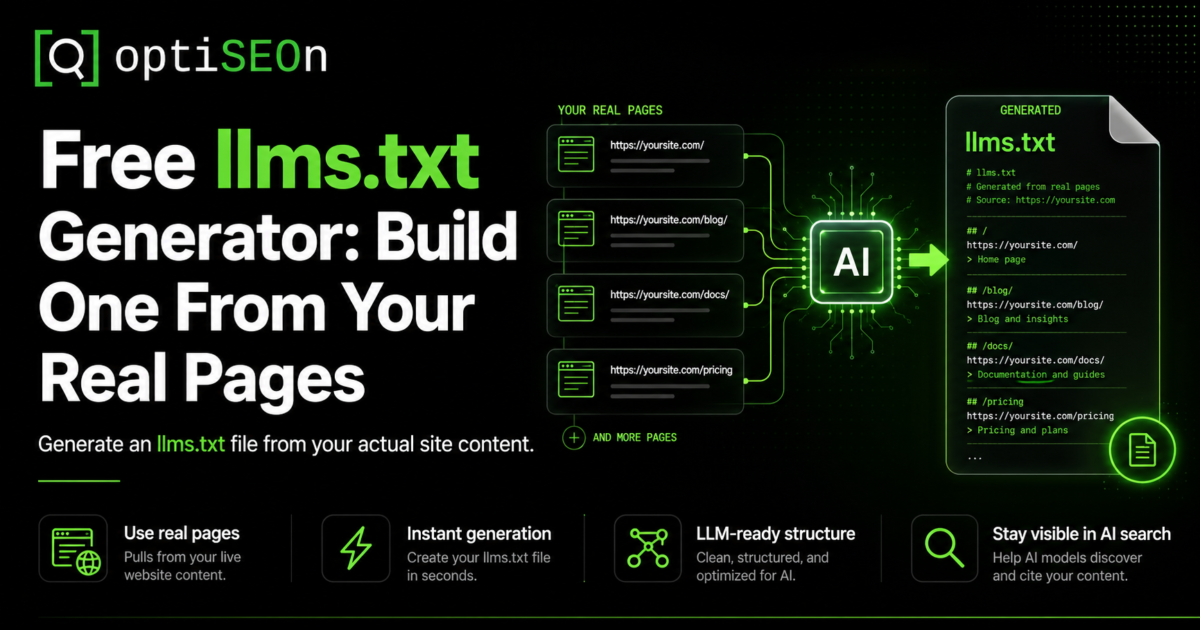
    The short version: LLM Optimization combines AEO content structure, GEO entity signals, and a few new techniques like llms.txt files, schema markup tuned for AI extraction, and consistent brand presence on the platforms AI tools cite most heavily.

    Side-by-side: SEO vs AEO vs GEO vs LLM

    DisciplineWhere it gets you visiblePrimary tacticBest for
    SEOGoogle, Bing search resultsKeywords, backlinks, technical SEOEvery business with a website
    AEOFeatured snippets, voice, People Also AskQ&A content, FAQ schema, structured answersService businesses, publishers, B2B
    Geographic SEOGoogle Maps, Map Pack, “near me”Google Business Profile, local citations, reviewsLocal businesses, multi-location brands
    Generative Engine OptimizationChatGPT, Gemini, Perplexity answersEntity signals, citation-worthy contentBusinesses competing for AI recommendations
    LLM OptimizationAll AI tools (umbrella term)Combined AEO + GEO + AI-specific techniquesAny business that wants to be AI-discoverable

    Which one does your business actually need?

    Here’s the honest answer: in 2026, most businesses need a combination, and trying to pick one is the wrong frame.

    But if you’re starting from scratch and have a limited budget, here’s the order I’d prioritize:

    1. Start with SEO and AEO together. They reinforce each other. You can’t earn featured snippets without solid SEO fundamentals, and you can’t earn AI citations without first being indexable and structured well.
    2. Add Geographic SEO next if you’re a local or service-area business. The map pack converts at higher rates than organic blue links for local intent.
    3. Layer LLM Optimization on top once you have the foundation. AI engines pull from already-authoritative sources, so the work you do for SEO and AEO directly feeds your AI visibility.

    Trying to skip the foundation and jump straight to “ranking on ChatGPT” rarely works. The AI engines are pulling from the same web your SEO is optimizing — they just present it differently.

    How OptiSEOn handles all four in one system

    Most agencies sell you one of these and call the rest an “upgrade.” That’s how you end up with a pretty website that ranks on Google but is invisible to ChatGPT, or a strong AI presence with no map pack visibility.

    OptiSEOn integrates all four pillars into one monthly engagement. SEO builds the foundation, AEO captures the answer-box opportunities, Geographic SEO owns your local market, and LLM Optimization gets you recommended where buyers are increasingly looking. See how the four pillars work together, or check out our pricing — month-to-month, no long-term contracts.

    Frequently Asked Questions

    What is the difference between SEO and AEO? SEO targets traditional ranked search results (the list of blue links on Google). AEO targets answer-based formats — featured snippets, voice search results, People Also Ask, and Google AI Overviews. AEO is best understood as a specialized layer on top of SEO, not a replacement.

    Is GEO the same as Generative Engine Optimization? “GEO” is currently used to mean two different things in 2026: Geographic SEO (local search and map pack optimization) and Generative Engine Optimization (showing up in AI-generated answers). Always clarify which meaning your agency or article is using.

    Do I need all four — SEO, AEO, GEO, and LLM? Most businesses benefit from all four because each one captures a different type of search. A local service business needs Geographic SEO heavily; a B2B SaaS company benefits more from LLM Optimization; almost everyone needs SEO and AEO as foundations.

    Which has the best ROI in 2026? Geographic SEO typically delivers the fastest ROI for local businesses because map pack visibility converts directly to phone calls and visits. LLM Optimization has the longest tail — once your brand is established as an AI-cited source, it compounds. SEO and AEO sit in the middle.

    Can I do this myself or do I need an agency? The technical foundation (schema, site speed, indexability) and the content-structuring work for AEO can be done in-house if you have the time. LLM Optimization and Geographic SEO are more nuanced and benefit from specialized expertise. The fastest path is usually a free audit to identify which areas you’re weakest in.


    Ready to figure out which of these your business actually needs? Book a free SEO + AI visibility audit — no pitch, no pressure. We’ll show you exactly where you’re winning and where you’re invisible.

  • How LLMs Are Replacing Traditional Search, and What You Can Do About It

    How LLMs Are Replacing Traditional Search, and What You Can Do About It

    How LLMs Are Replacing Traditional Search, and What You Can Do About It

    The way people find information online is changing—fast. Traditional search engines like Google are no longer the only gateway to answers. Instead, users are turning to large language models (LLMs) like ChatGPT, Claude, and Perplexity AI to get direct, conversational responses. This shift is reshaping SEO—and giving rise to GEO (Generative Engine Optimization) and AEO (Answer Engine Optimization).

    If you rely on organic traffic, this isn’t a trend to watch—it’s a transformation you need to act on.


    What Are LLMs and Why Are They Disrupting Search?

    Large Language Models (LLMs) are AI systems trained on massive datasets to understand and generate human-like text. Instead of returning a list of links like traditional search engines, they deliver direct answers, summaries, and recommendations.

    Key Differences: Traditional Search vs LLMs

    FeatureTraditional SearchLLM-Based Search
    OutputLinksDirect answers
    User IntentKeywordsNatural language questions
    InteractionOne-wayConversational
    Click BehaviorMultiple clicksZero-click answers

    This means users are skipping websites entirely and getting what they need instantly.


    The Rise of Zero-Click Search

    “Zero-click searches” are queries where users get their answer without clicking a result. This trend has exploded with AI.

    Why it matters:

    • Less traffic to websites
    • More competition for visibility inside AI responses
    • Authority signals matter more than ever

    Platforms like Google SGE are integrating AI directly into search results—blurring the line between search engines and LLMs.


    What Is GEO (Generative Engine Optimization)?

    GEO is the practice of optimizing your content so it gets cited, summarized, or used by AI models.

    Instead of ranking #1 on Google, your goal becomes: being the source AI trusts and references.

    How GEO Works:

    1. AI scans high-quality, structured content
    2. It extracts relevant insights
    3. It synthesizes answers for users

    If your content isn’t optimized for this, you’re invisible.


    What Is AEO (Answer Engine Optimization)?

    AEO focuses on structuring your content so it can be easily turned into direct answers.

    Think:

    • Featured snippets
    • FAQ sections
    • Voice search responses

    AEO is the bridge between SEO and AI-driven search.


    Why Traditional SEO Alone Is No Longer Enough

    Classic SEO still matters—but it’s no longer sufficient.

    Old SEO Focus:

    • Keywords
    • Backlinks
    • Rankings

    New Reality:

    • Context
    • Authority
    • Clarity
    • Structured answers

    Search is evolving from “find the best page” to “give me the best answer.”


    How to Optimize for LLMs (GEO + AEO Strategy)

    Here’s what actually works in 2026:

    1. Write Like You’re Answering a Question

    Use clear, direct language.

    Example:

    • ❌ “Best practices for optimization strategies…”
    • ✅ “To optimize for AI search, focus on clear answers, structured content, and authority signals.”

    2. Use Structured Content

    Break content into:

    • Headings (H2, H3)
    • Bullet points
    • Short paragraphs

    This makes it easier for AI to extract information.

    3. Add FAQ Sections (AEO Goldmine)

    Include real questions users ask:

    Q: Are LLMs replacing Google?
    A: Not entirely, but they are reducing reliance on traditional search by providing direct answers.

    4. Build Topical Authority

    Cover entire topics—not just keywords.

    Instead of: one article on “SEO tips”

    Create:

    • SEO basics
    • Advanced SEO
    • GEO strategies
    • AEO frameworks

    5. Optimize for Entities, Not Just Keywords

    Search engines and AI models understand entities (people, brands, concepts). Mention and contextualize:

    • Tools (e.g., ChatGPT)
    • Companies (e.g., Google)
    • Concepts (e.g., Generative AI, NLP)

    6. Increase Content Credibility

    AI favors trustworthy sources. Boost credibility with:

    • Author bios
    • Data and statistics
    • External references
    • Real-world examples

    7. Focus on Semantic SEO

    Use related terms naturally. Instead of repeating “LLMs replacing search,” include:

    • AI search engines
    • Conversational AI
    • Generative search
    • Answer engines

    The Future of Search: Hybrid Models

    The future isn’t “Google vs AI”—it’s integration. Search engines are becoming AI-driven, and AI tools are becoming search engines.

    Expect:

    • More personalized answers
    • Fewer clicks
    • Higher demand for trusted sources

    What You Should Do Right Now

    If you want to stay ahead:

    • Audit your content— Is it clear, structured, and answer-focused?
    • Add FAQs to key pages— Capture AEO opportunities
    • Build authority clusters— Own your niche completely
    • Optimize for AI visibility— Think beyond rankings

    Final Thoughts

    LLMs aren’t just changing search—they’re redefining how information is discovered. If your content isn’t being used by AI, it’s not being seen.

    The winners in this new era will be those who:

    • Create clear, authoritative content
    • Optimize for answers, not just rankings
    • Adapt to GEO and AEO strategies early

    TL;DR

    • LLMs like ChatGPT are replacing traditional search behavior
    • Zero-click searches are rising
    • GEO + AEO are the future of SEO
    • Structured, authoritative content wins
    Home » SEO